In today’s rapidly evolving world, new concepts, systems, and frameworks emerge regularly, capturing the interest of professionals, enthusiasts, and learners alike. One such term gaining attention is Merfez. While many beginners encounter the term and become curious about its purpose and significance, understanding it thoroughly can feel challenging without a structured guide.
This comprehensive beginner’s guide explores the fundamentals of Merfez, its structure, key features, practical applications, and the steps required to start learning it effectively. Whether you have recently discovered Merfez or are looking to build a stronger foundation, this guide will help you understand the concept from the ground up.
What Is Merfez? Understanding the Fundamentals
Definition and Meaning of Merfez
Merfez can be understood as a framework, system, or concept designed to organize processes, improve efficiency, and provide structured solutions within its area of application. Although interpretations may vary depending on the context in which the term is used, the central idea revolves around creating a reliable and systematic approach to achieving specific objectives.
For beginners, it is helpful to think of Merfez as a method that connects different components together, allowing them to function as a coordinated whole rather than as isolated elements.
Why Merfez Is Attracting Attention
Several factors contribute to the growing interest in Merfez:
- Increased demand for organized systems and methodologies
- The need for improved efficiency and productivity
- Growing adoption across various industries and fields
- Accessibility for beginners and experienced users alike
- Potential for future development and innovation
As organizations and individuals seek smarter ways to solve problems and manage complex processes, concepts like Merfez become increasingly valuable.
Key Concepts Every Beginner Should Know
Before diving deeper, it is important to understand several foundational concepts:
Structure
Merfez relies on a clearly defined structure that guides how different elements interact.
Functionality
Each component within the system serves a specific purpose and contributes to overall performance.
Integration
Merfez emphasizes coordination and cooperation among different parts of a process.
Adaptability
One of its strengths is the ability to adapt to changing requirements and environments.
Continuous Improvement
Merfez often incorporates mechanisms for evaluation and optimization over time.
Common Misconceptions About Merfez
Many newcomers misunderstand Merfez because of limited information or assumptions. Common misconceptions include:
It Is Too Complex for Beginners
While some aspects may seem advanced, beginners can learn the fundamentals through gradual study and practice.
It Applies Only to Experts
In reality, Merfez often provides value at all skill levels.
It Is Limited to One Industry
The principles behind Merfez can frequently be adapted across multiple fields and applications.
It Delivers Instant Results
Like most structured systems, success requires understanding, implementation, and ongoing refinement.
The Core Structure and Function of Merfez
How Merfez Works in Simple Terms
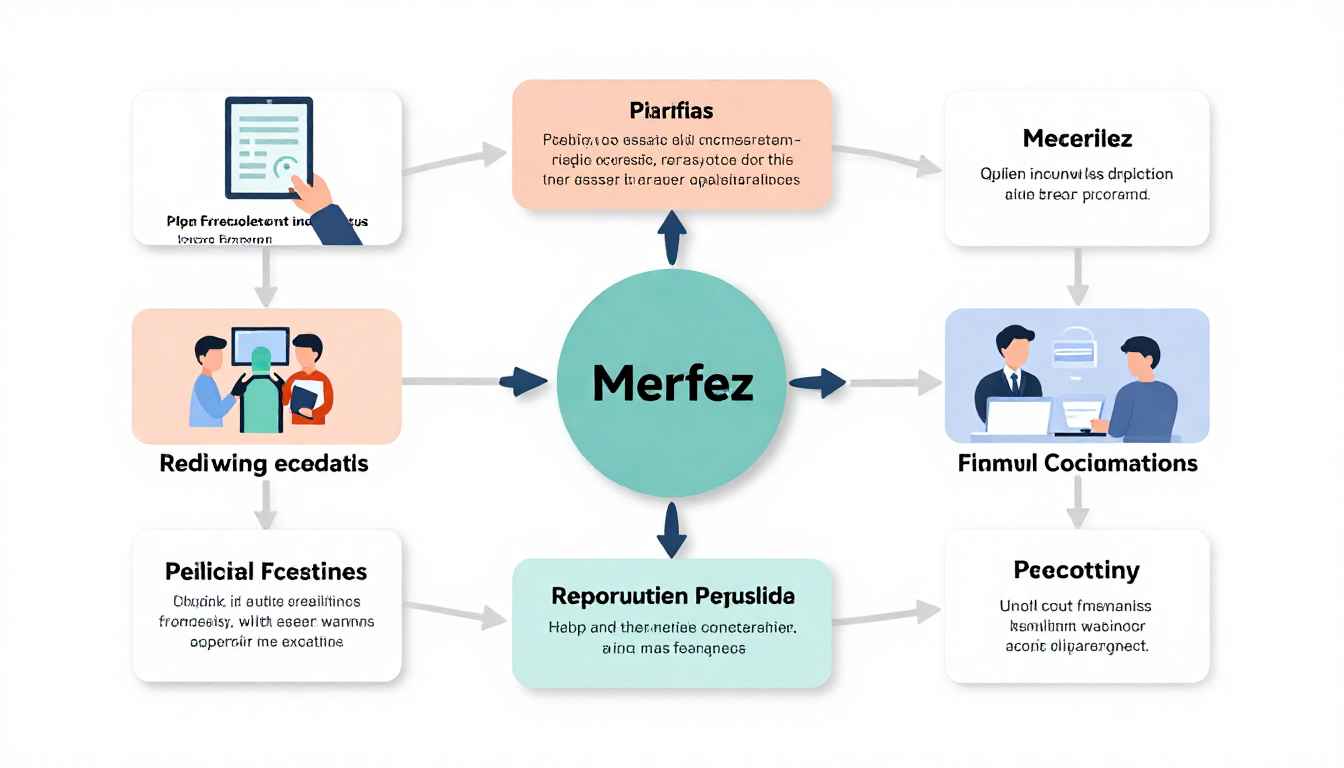
At its core, Merfez functions by bringing together various components into a unified framework. Instead of addressing individual tasks separately, it organizes them into a coordinated process that improves consistency and effectiveness.
The overall workflow typically follows these stages:
- Input collection
- Processing and analysis
- Coordination of components
- Execution of actions
- Evaluation and optimization
This systematic approach helps ensure that objectives are achieved efficiently.
Main Components and Their Roles
Although specific implementations may vary, Merfez generally includes several key components.
Input Layer
This stage gathers information, resources, or requirements necessary for operation.
Processing Layer
Data or inputs are analyzed and transformed into actionable outputs.
Management Layer
This component oversees coordination and ensures alignment with goals.
Execution Layer
Actions are implemented based on established guidelines and processes.
Feedback Layer
Results are monitored and evaluated to identify opportunities for improvement.
The Process Behind Its Operation
Understanding the operational process helps beginners appreciate how Merfez creates value.
Step 1: Information Gathering
Relevant data and requirements are collected.
Step 2: Organization
Inputs are categorized and prepared for processing.
Step 3: Analysis
The system examines available information and identifies appropriate actions.
Step 4: Implementation
Planned actions are executed according to defined procedures.
Step 5: Evaluation
Performance is reviewed to measure effectiveness and identify adjustments.
This cycle often repeats continuously, enabling ongoing improvement.
Beginner-Friendly Examples to Illustrate the Concept
Example 1: Project Management
A team uses Merfez principles to organize tasks, assign responsibilities, monitor progress, and evaluate outcomes.
Example 2: Learning Programs
Students follow a structured learning framework that guides them through lessons, assessments, and feedback loops.
Example 3: Business Operations
Organizations apply coordinated processes to improve productivity, reduce inefficiencies, and enhance decision-making.
These examples demonstrate how Merfez supports organization and effectiveness in practical settings.
Key Features That Make Merfez Unique
Distinct Characteristics of Merfez
Several characteristics help distinguish Merfez from other approaches.
Structured Framework
It provides a clear roadmap for managing processes and activities.
Scalability
The framework can often grow alongside increasing requirements.
Flexibility
Users can adapt it to different environments and objectives.
Consistency
Standardized procedures help maintain predictable outcomes.
Efficiency
Resources can be utilized more effectively through organized workflows.
Important Functions and Capabilities
Merfez supports numerous functions that enhance performance.
Process Optimization
Activities are streamlined to eliminate unnecessary steps.
Resource Coordination
People, tools, and information work together more effectively.
Decision Support
Structured information improves decision-making capabilities.
Performance Monitoring
Continuous evaluation helps identify strengths and weaknesses.
Knowledge Management
Important information can be organized and shared efficiently.
Advantages Compared to Similar Concepts or Systems
Merfez offers several benefits compared to less structured alternatives.
Better Organization
Clearly defined processes reduce confusion and inconsistency.
Improved Communication
Standardized procedures encourage collaboration among participants.
Greater Adaptability
The framework can respond more effectively to changing conditions.
Enhanced Productivity
Efficient workflows often lead to better results with fewer resources.
Long-Term Sustainability
Continuous improvement supports lasting success.
What Sets Merfez Apart for New Users
Beginners often appreciate Merfez because it balances structure with flexibility.
Unlike systems that require extensive expertise before producing value, Merfez allows users to understand foundational principles quickly and gradually expand their knowledge over time.
This accessibility makes it attractive to learners seeking practical and scalable solutions.
Practical Applications and Benefits of Merfez
Real-World Uses of Merfez
Merfez principles can be applied across many sectors and activities.
Business Management
Organizations use structured frameworks to improve planning and execution.
Education
Learning systems benefit from organized pathways and performance tracking.
Technology
Development teams use coordinated processes to manage projects and innovation.
Healthcare
Structured workflows help improve service delivery and operational efficiency.
Personal Development
Individuals can use Merfez principles to organize goals, habits, and productivity efforts.
Who Can Benefit from Understanding It
A wide range of individuals can gain value from learning about Merfez.
Students
Develop stronger organizational and analytical skills.
Professionals
Improve efficiency and performance in daily work.
Entrepreneurs
Create scalable systems for business growth.
Managers
Coordinate teams and resources more effectively.
Lifelong Learners
Develop practical problem-solving abilities applicable across different situations.
Major Advantages and Opportunities
Learning Merfez can create numerous opportunities.
Increased Productivity
Structured approaches help accomplish more in less time.
Better Problem-Solving
Systematic analysis improves decision quality.
Enhanced Collaboration
Teams can work together more effectively.
Improved Adaptability
Users become better equipped to handle changing circumstances.
Professional Growth
Knowledge of organized frameworks can support career development.
Potential Limitations Beginners Should Be Aware Of
No system is perfect, and beginners should understand potential challenges.
Learning Curve
Initial concepts may require time and practice to master.
Implementation Effort
Successful adoption often requires planning and commitment.
Resistance to Change
Individuals or organizations may hesitate to adopt new approaches.
Resource Requirements
Some applications may require tools, training, or ongoing support.
Recognizing these challenges helps users set realistic expectations.
Getting Started with Merfez: A Beginner’s Roadmap
Essential Steps to Begin Learning Merfez
Starting your Merfez journey does not have to be complicated.
Step 1: Learn the Fundamentals
Focus on understanding the core concepts and terminology.
Step 2: Study Real Examples
Examine practical applications to see how the framework operates.
Step 3: Practice Small Projects
Apply basic principles in manageable situations.
Step 4: Evaluate Results
Analyze outcomes and identify areas for improvement.
Step 5: Expand Your Knowledge
Gradually explore advanced topics and applications.
Useful Resources and Learning Strategies
Several approaches can accelerate learning.
Educational Articles
Read beginner-friendly guides and industry publications.
Online Courses
Structured lessons provide step-by-step instruction.
Professional Communities
Engage with others who share similar interests.
Case Studies
Review examples of successful implementation.
Hands-On Practice
Practical experience remains one of the most effective learning methods.
Common Mistakes to Avoid
Many beginners encounter similar challenges.
Trying to Learn Everything at Once
Focus on foundational concepts before moving to advanced topics.
Ignoring Practical Application
Knowledge becomes more valuable when applied in real situations.
Overcomplicating Processes
Start simple and gradually increase complexity.
Neglecting Feedback
Continuous evaluation is essential for improvement.
Giving Up Too Early
Consistency and persistence lead to deeper understanding.
Future Trends and What to Expect From Merfez
As technology and organizational practices continue evolving, Merfez is likely to become even more relevant.
Potential future developments include:
- Increased automation and integration
- Greater use of data-driven decision-making
- Improved scalability for large organizations
- Enhanced accessibility through digital tools
- Broader adoption across industries
These trends suggest that understanding Merfez today may provide valuable advantages in the future.
Conclusion
Merfez represents a structured and adaptable approach that helps individuals and organizations manage processes more effectively. By understanding its fundamentals, core structure, unique features, practical applications, and learning roadmap, beginners can build a strong foundation for future growth.
The key takeaway is that Merfez is not simply a theoretical concept—it is a practical framework designed to improve organization, efficiency, and decision-making. Whether applied in education, business, technology, or personal development, its principles can support better outcomes and continuous improvement.
As you continue exploring Merfez, focus on learning the basics, practicing real-world applications, and staying open to new developments. With consistent effort and curiosity, you can unlock the full potential of this increasingly important concept and use it to achieve your goals more effectively.